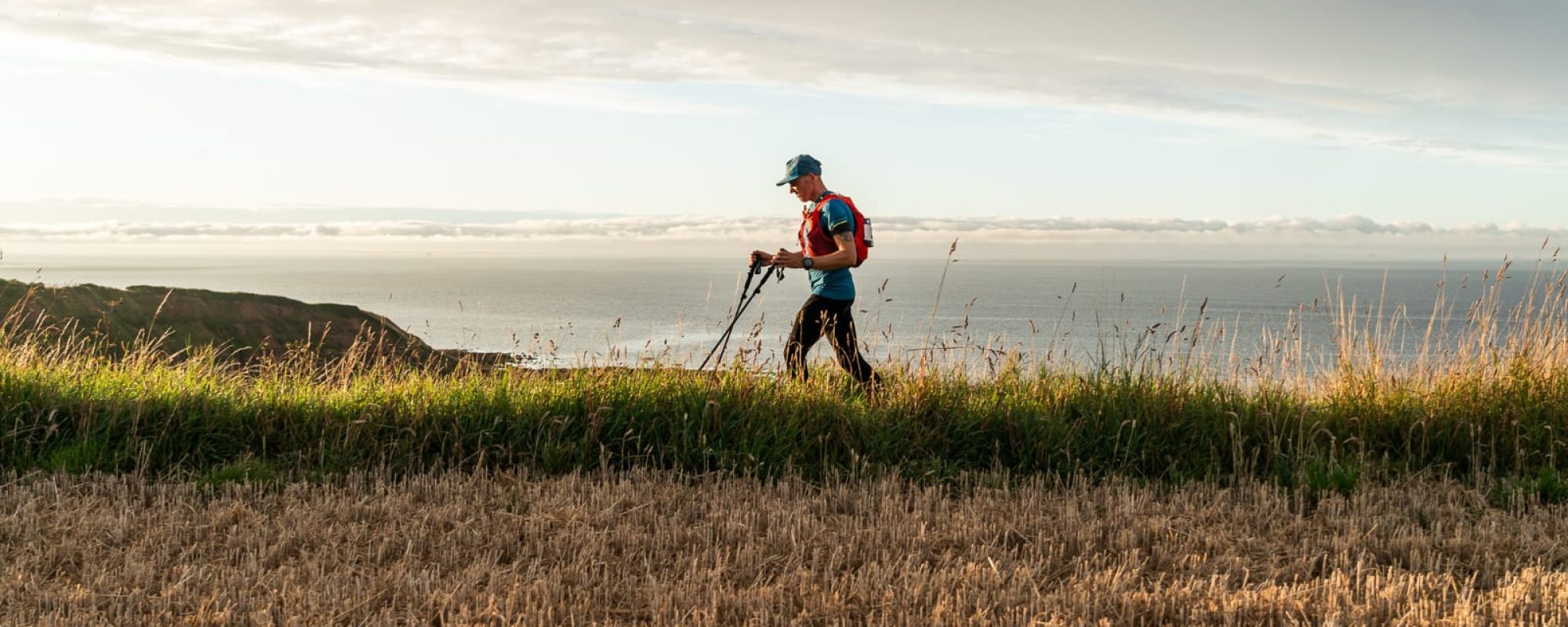
Through many years of challenges and long-distance running in Scotland, England, and Wales, I have learned the importance of respecting and taking care of your body. I plan to continue doing this for as long as I can. It’s the way of life I have chosen. I am a hard worker, a son, a husband, a father, an ultra-running coach, and an athlete. I share stories, teach people how to be better every day, and try to motivate everyone to work hard. I have big dreams and ideas of what I would like to achieve. One day, it will all come to an end, but I will have a lifetime of memories to pass on to my grandchildren and anyone willing to listen. My list of stories and experiences is constantly expanding, and I will keep it that way for as long as I can. I am only 37 years old and plan to keep going until I’m 60 or more! Long-distance running takes a significant toll on the body, and it is crucial to listen to your body’s signals and give it the care and attention it needs. This includes proper nutrition, hydration, rest, and recovery. It also means being mindful of any signs of injury or strain and addressing them promptly to prevent further damage.
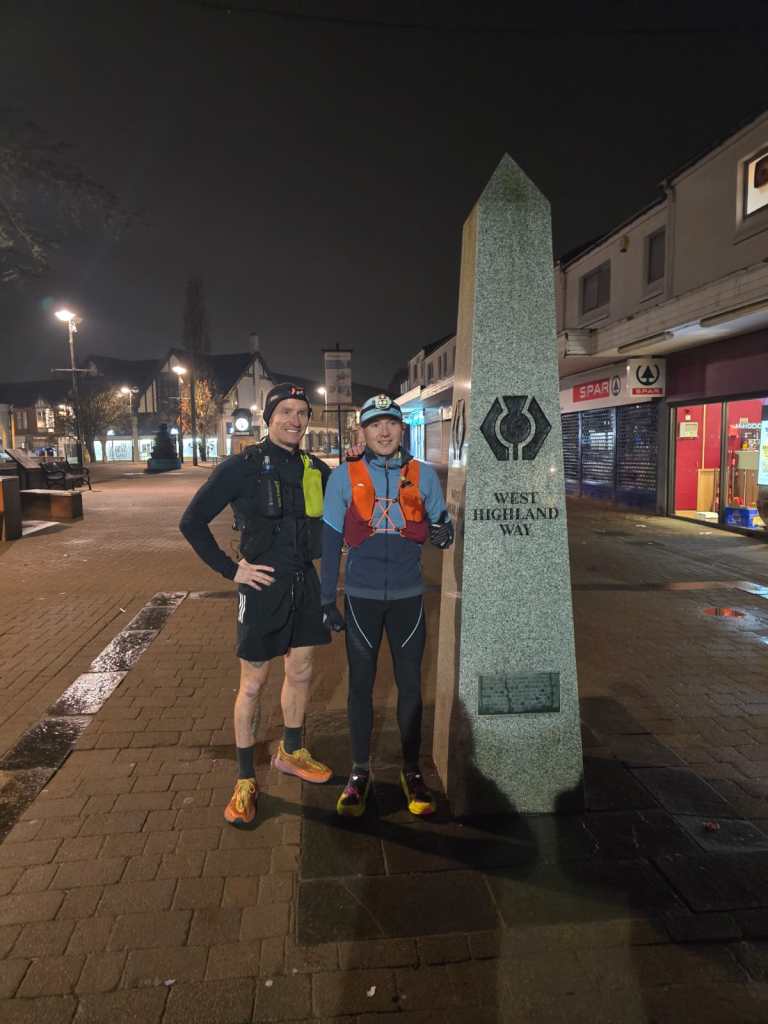
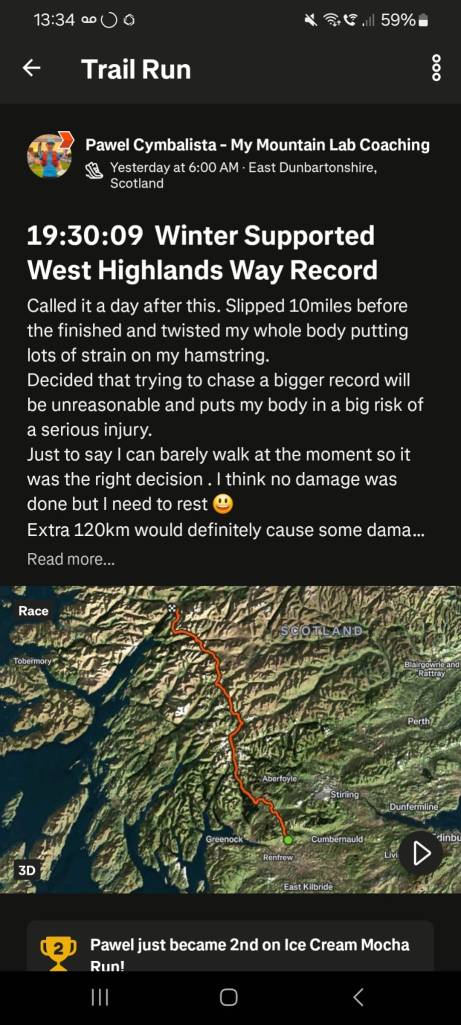
This weekend, I completed the West Highland Way with a support team in 19 hours, 30 minutes, and 9 seconds, setting a new record on the trail. The route spans 154 kilometers with 4200 meters of elevation. The West Highland Way is a renowned long-distance trail that stretches from Milngavie, just outside Glasgow, to Fort William in the Scottish Highlands. The trail traverses some of Scotland’s most stunning landscapes, including lochs, glens, and rugged mountains. It is a trail that demands respect and endurance, with its challenging terrain and unpredictable weather conditions.

I like to start the year with a big challenge, and without a doubt, this was it! The West Highland Way always presents a formidable test. I have completed the route three times now—once unsupported, setting a record in the summer; once in a race, finishing 4th; and now supported in winter conditions. Each experience on the trail has been unique, pushing my limits and teaching me valuable lessons about resilience, perseverance, and the importance of a strong support system.
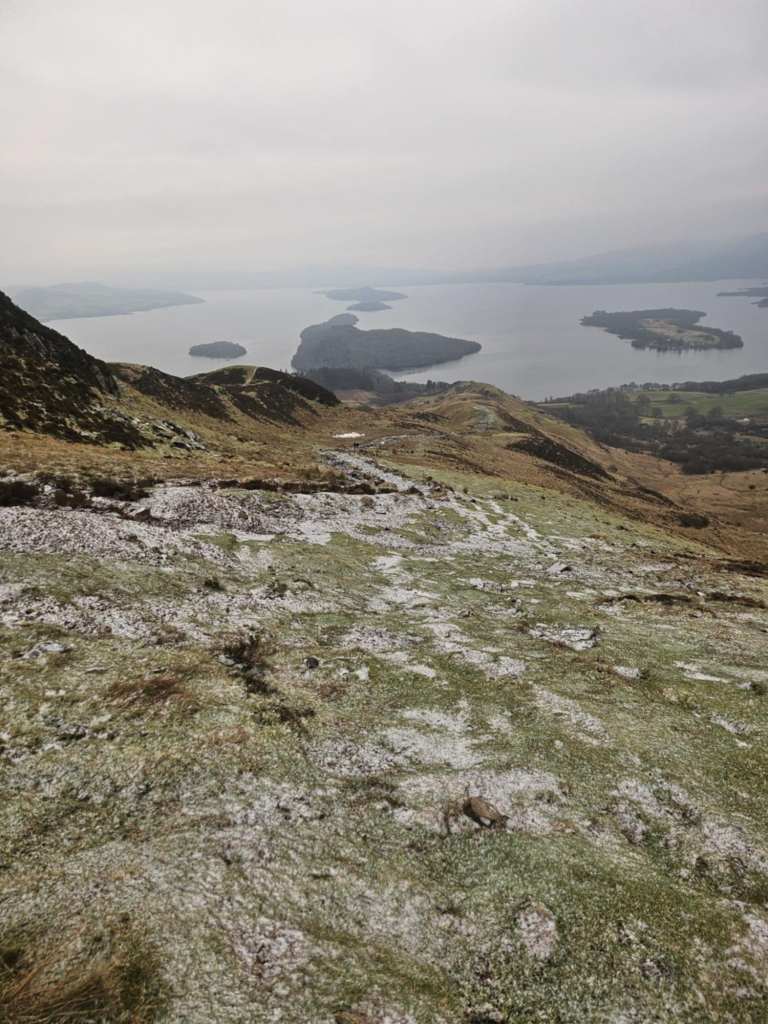
The weather was kind to me most of the time. I encountered a couple of snow showers, and towards the end, the wind started to pick up, increasing the wind chill. The temperature hovered around 0-2°C, but the wind cut right through me, making it feel much colder. It was a very long day on the cold trail, and maintaining my body temperature was a constant challenge. Winter running adds an extra layer of difficulty, as the body has to work harder to stay warm, and the trail conditions can be treacherous with ice and snow.

My amazing support team consisted of: Ryan, my brother-in-law; Scott Brown from SBF Irvine; my wife Ashley, who managed social media; Monty; Ben Miller; Ruairdh Oliver-Jones from Lochaber AC; Stuart Malcolm; Manny Gorman from Westies; and Coalin Finn. The entire team worked very hard, and we had an incredible time on the trail. Nonetheless, it was gruelling work. Each member of the team played a crucial role, from providing physical support and supplies to offering emotional encouragement and keeping spirits high. Their dedication and effort were important in my success.

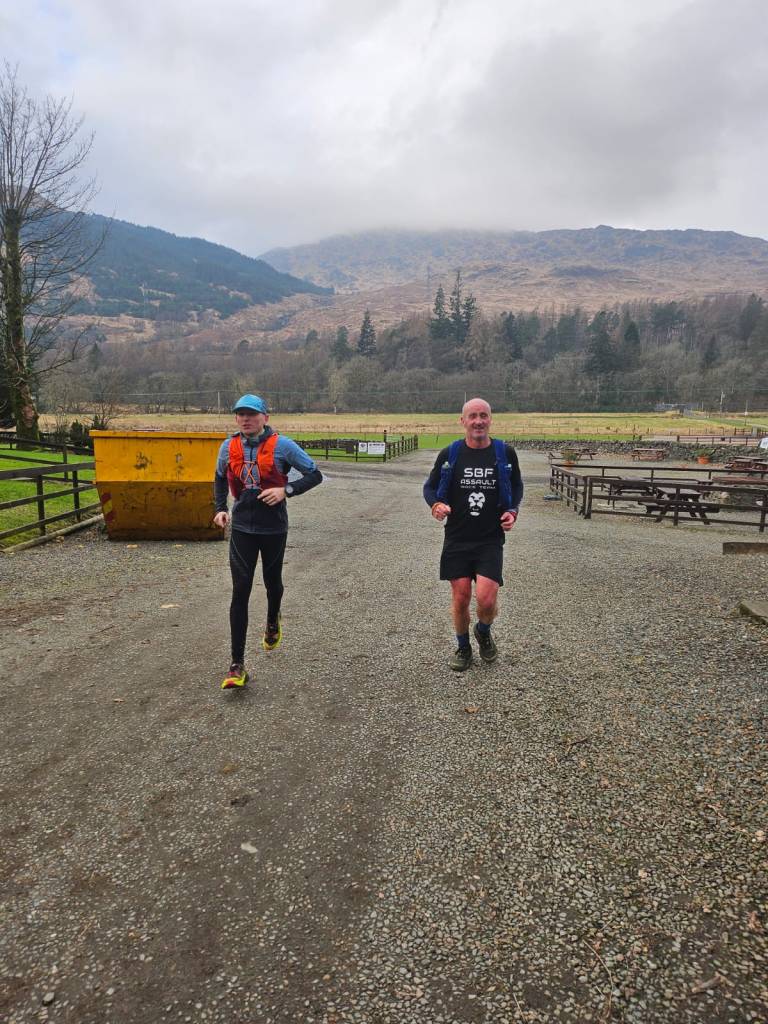


I took a 5-minute break every time I stopped at a checkpoint to refuel, refill, and readjust myself. Anything longer than a 5-minute break resulted in my body temperature dropping, and I began to shiver. It was very hard to control, but I managed to stay on top of it for most of the way. These breaks were essential for replenishing energy and staying hydrated, but they also required careful management to prevent my body from cooling down too much.
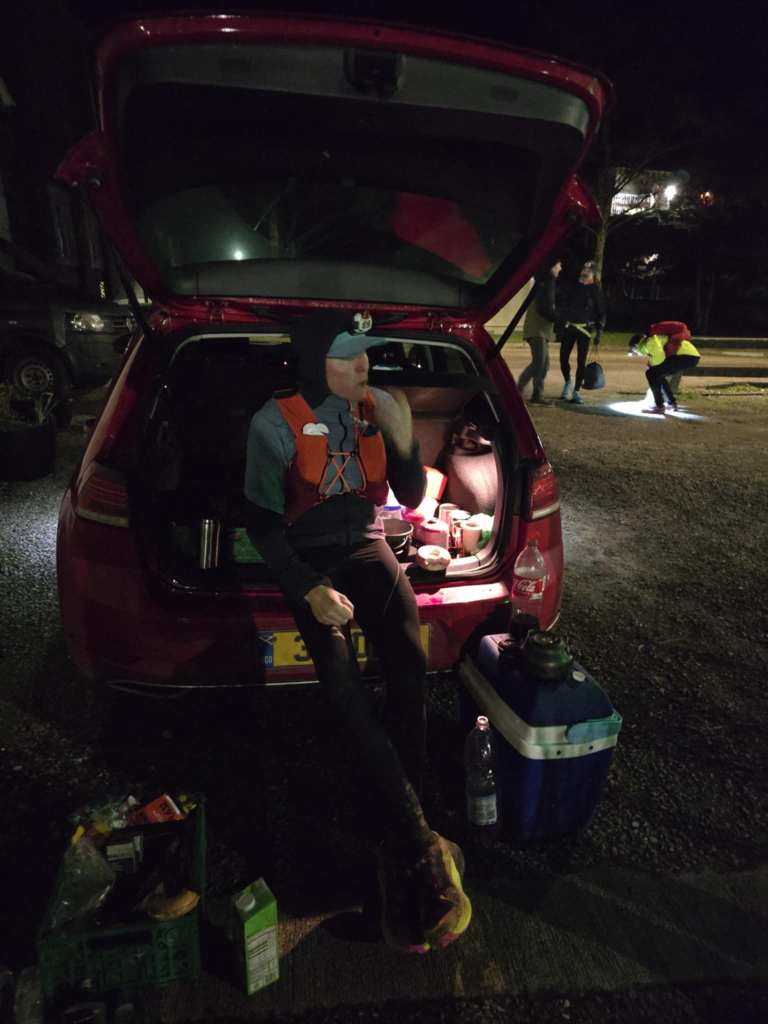
The biggest challenges were the cold wind, ice, and frozen rocks on higher ground. These conditions required constant 100% focus. I had to keep my head in the game, focusing on eating and drinking plenty to ensure my body had the fuel to create energy and regulate my body temperature. Additionally, some sections of the West Highland Way are quite technical, with many roots and sharp rocks sticking out of the ground. These technical sections demanded careful navigation and increased the risk of injury, especially in the dark or when fatigued.

The hardest section for me was the last 11 kilometres of Loch Lomond, from Inversnaid to Beinglas, where I couldn’t find a good rhythm due to the technical terrain. It was very frustrating, and I was slowly losing focus. However, the more runnable sections that followed allowed me to regain my composure and confidence. This part of the trail is known for its challenging terrain, with narrow, rocky paths and numerous obstacles.

My team worked tirelessly to keep my spirits up. They gave me space when I needed, we chatted, shared stories, and enjoyed our time on the trails. Despite the challenges, there were many positives on the trail. I managed to run several sections of the West Highland Way in my personal record time, including the stretches from Milngavie to Inverarnan, Bridge of Orchy to Glencoe Mountain Resort, and then to Kinlochleven. These sections were absolutely amazing and felt the best to me. The camaraderie and support from my team were invaluable, providing motivation and helping to distract from the pain and fatigue.

Darkness plays a significant role in winter long-distance running, and you must be comfortable with it. Fortunately, I have no issues running in the dark and felt good throughout. I had a few trips and slips during the run, but nothing that deterred me until the final leg from Kinlochleven to Fort William. Running in the dark requires a strong mental fortitude, as visibility is limited, and the trail can feel more isolating. It also requires good-quality headlamps and careful attention to foot placement to avoid tripping.
I rolled my right ankle on a rock, twisting my body and putting pressure on my right hamstring and lower back. This caused significant discomfort and unusual pain. After quickly shaking it off, I kept moving but noticed my body slightly twisting to the right, and my right hamstring tensed up, slowing me down. With 16 kilometers (10 miles) left to Fort William, I had to push through. I was very focused on my body, trying to keep everything aligned to avoid further damage. I was also racing against the clock. I knew I would set the record if I just kept pushing. It was a real fight, but I made it! Thanks to my support team, who never gave up on me and pushed me to the end. This section of the run was a true test of mental strength and determination, as I had to push through the pain and keep going despite the discomfort.
I should add that this run was part of a bigger project to jumpstart my ultra-running year. I initially planned to run both the West Highland Way and the Great Glen Way in one go, totalling 273 kilometres and 6500 meters of elevation. Although the entire adventure didn’t come together, I am proud to have set a new Winter Supported West Highland Way record. It wouldn’t have been possible without the amazing team I had!
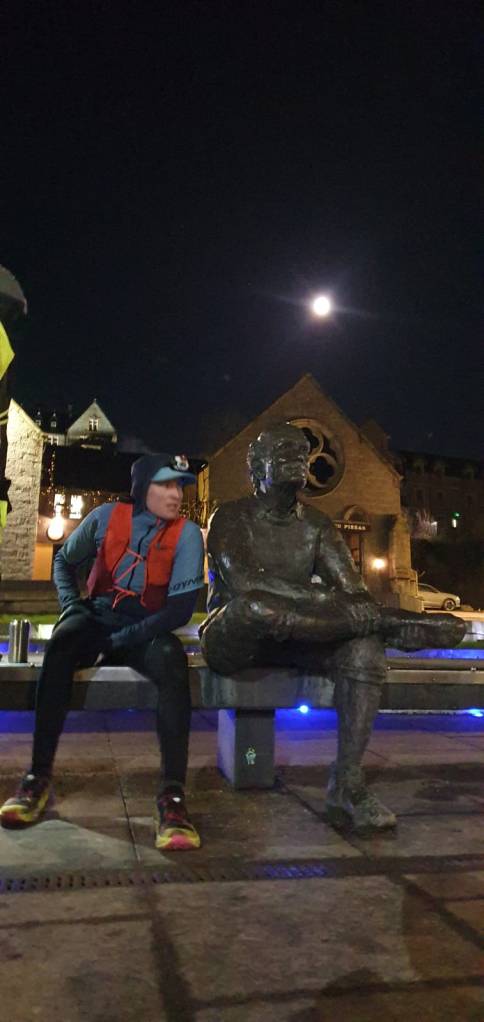
As I reflect on this achievement, I am reminded of the importance of setting ambitious goals and pushing myself to new limits. Each challenge I undertake helps me grow as an athlete and a person, teaching me valuable lessons about perseverance, resilience, and the power of a strong support team.
Mental strength is just as important as physical fitness in long-distance running. There will be moments of doubt, pain, and fatigue, and it is essential to have the mental resilience to push through these challenges. This involves staying focused, maintaining a positive attitude, and drawing on the support of your team and loved ones. Visualization techniques, setting small goals, and keeping a strong sense of purpose can all help to build mental strength.
Despite the challenges and difficulties, there is immense joy to be found in running. The feeling of freedom and exhilaration that comes from moving through beautiful landscapes
 mymountainlab.uk